

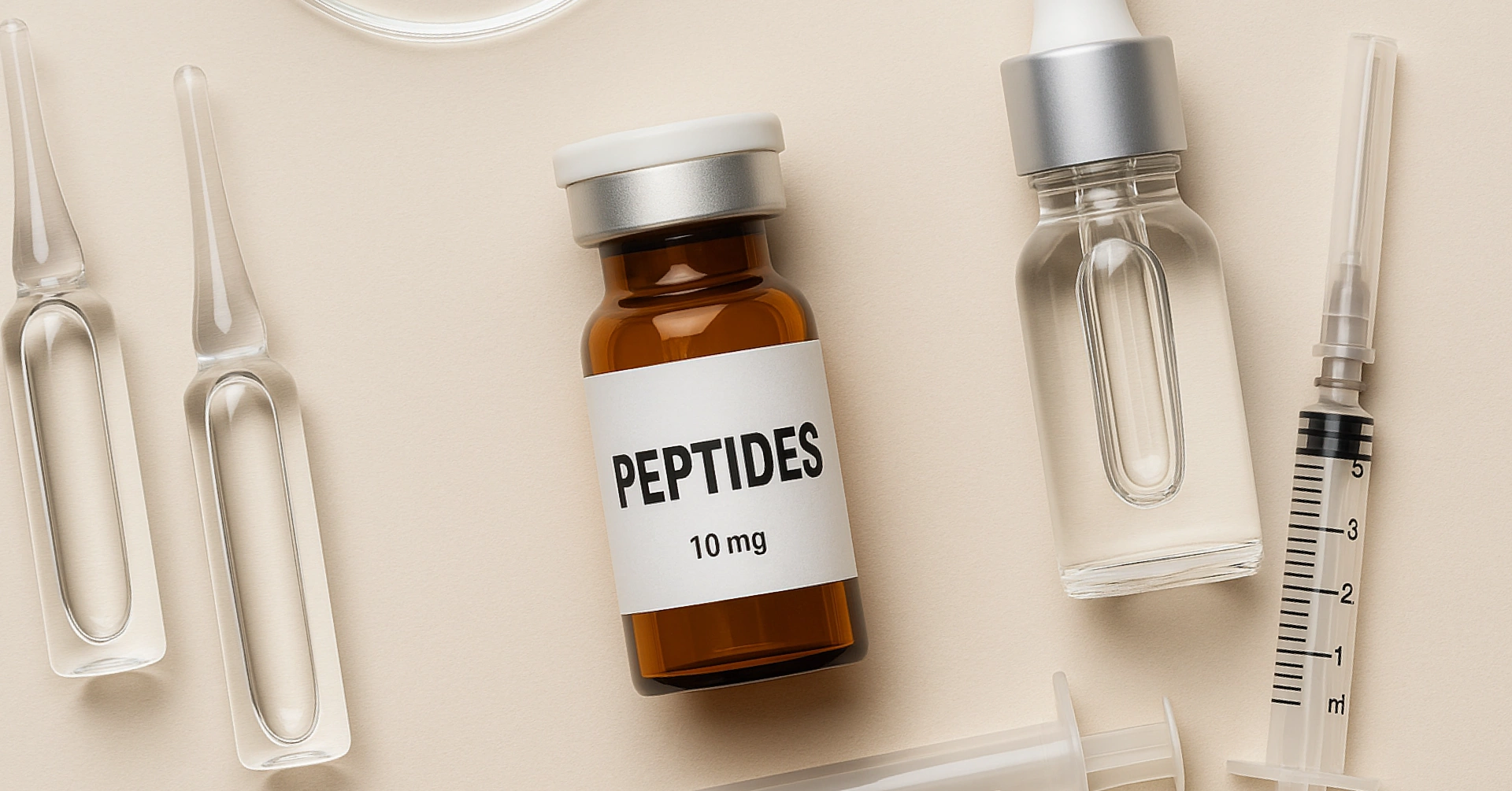
Peptide Testing

Peptide Testing: How Research Peptides Are Tested for Purity and Identity
Peptide testing is an important part of research peptide characterization. Researchers need reliable information about the materials used in laboratory studies, particularly when experiments depend on the identity, purity, and consistency of a peptide.
Several analytical techniques can be used to evaluate research peptides. Among the most commonly discussed are High-Performance Liquid Chromatography (HPLC) and mass spectrometry (MS).
These techniques provide different types of information and may be used together to develop a more complete understanding of a peptide sample.
Why Is Research Peptide Testing Important?
A peptide’s name alone does not provide enough information to determine its analytical characteristics.
Researchers may need to establish:
- Whether the material corresponds to the expected peptide
- The approximate level of detectable impurities
- The molecular mass
- Whether the material meets defined specifications
- Whether different batches show consistent characteristics
The appropriate testing strategy depends on the peptide, research objective, formulation, and required specifications.
What Is Peptide Characterization?
Peptide characterization refers to the analytical examination of a peptide to understand its chemical and physical characteristics.
Characterization may involve multiple analytical approaches, including:
- HPLC
- Mass spectrometry
- Chromatographic analysis
- Spectroscopic techniques
- Other laboratory methods
No single analytical technique necessarily answers every question about a research peptide.
HPLC Peptide Testing
High-Performance Liquid Chromatography (HPLC) is widely used for chromatographic separation and analysis.
In peptide research, HPLC can help researchers assess the relative presence of different components within a sample.
A chromatogram may show several peaks corresponding to compounds or components separated during the analytical process.
The principal peak may be associated with the target peptide, while additional peaks can represent other detectable components.
What Can HPLC Tell Researchers?
Depending on the method, HPLC can provide information related to:
- Chromatographic purity
- Retention behavior
- Presence of additional detectable components
- Batch-to-batch analytical comparisons
The interpretation of HPLC results depends on the analytical method and conditions used.
What Is Mass Spectrometry?
Mass spectrometry (MS) is an analytical technique that measures the mass-to-charge ratios of ions.
For peptide research, mass spectrometry can provide information that supports the characterization and identification of peptide molecules.
When combined with chromatographic techniques, mass spectrometry can provide complementary information to help researchers evaluate a sample.
HPLC vs Mass Spectrometry
HPLC and mass spectrometry serve different analytical purposes.
| Technique | General purpose |
|---|---|
| HPLC | Separation and assessment of chromatographic components |
| Mass spectrometry | Molecular mass and identification-related information |
| Combined approaches | More comprehensive characterization |
For this reason, researchers should not automatically treat one technique as a replacement for another.
What Is Peptide Identity Testing?
Peptide identity testing is intended to help determine whether a sample corresponds to the expected peptide.
Identity characterization can be particularly important when different peptides have similar names or related structures.
Depending on the research requirements, analytical methods may provide evidence related to:
- Molecular mass
- Chemical characteristics
- Chromatographic behavior
- Sequence-related properties
The appropriate identity-testing strategy depends on the specific peptide.
What Is Peptide Purity Testing?
Peptide purity testing evaluates the relative presence of the target peptide and other detectable components according to a defined analytical method.
Researchers should understand that a stated purity percentage is meaningful only in the context of the analytical method used to determine it.
For example, chromatographic purity obtained from an HPLC method does not necessarily describe every possible impurity or characteristic of a sample.
Understanding a Peptide COA
A Certificate of Analysis (COA) can provide important product- or batch-specific information.
A COA may include:
- Product name
- Batch number
- Purity
- Analytical method
- Test result
- Specification
- Testing date
Researchers should examine the actual information presented in the documentation and understand which analytical methods were used.
What Should Researchers Look for on a COA?
When reviewing a peptide COA, consider:
Product identification
Does the document clearly identify the product?
Batch information
Is there a batch or lot number?
Analytical result
What test was performed and what result was obtained?
Purity specification
Is the stated purity associated with a defined analytical method?
Testing information
Is information about the testing laboratory or testing date provided where applicable?
These details can help researchers better understand the documentation accompanying a research material.
Does High Purity Mean High Quality?
Not necessarily.
Purity is an important characteristic, but overall peptide quality involves multiple factors.
Researchers may also consider:
- Identity
- Molecular characterization
- Stability
- Formulation
- Storage conditions
- Batch consistency
- Analytical documentation
A product with a high stated purity should still be evaluated in the context of the research requirements and available characterization data.
Peptide Batch-to-Batch Consistency
For research programs involving multiple experiments or batches, consistency can be an important consideration.
Researchers may compare available analytical information between batches to determine whether relevant specifications remain within expected ranges.
Batch information can also make laboratory records easier to maintain.
What Factors Can Affect Peptide Quality?
Peptide characteristics can be affected by several environmental and handling factors.
These can include:
- Temperature
- Moisture
- Light
- Storage duration
- Container conditions
- Repeated handling
- Reconstitution
- Freeze-thaw exposure
Researchers should follow the specific storage and handling recommendations provided for the product.
Choosing a Research Peptide Supplier
When selecting a research peptide supplier, researchers should consider whether the supplier provides transparent information about testing and product characterization.
Useful information can include:
- Product specifications
- Purity information
- Analytical methods
- COA documentation
- Batch information
- Storage requirements
- Research Use Only status
A supplier should distinguish clearly between documented analytical results and general marketing claims.
Research Peptide Testing in Germany
Laboratories in Germany evaluating research peptides should consider the same fundamental scientific quality questions while also reviewing applicable German and European requirements.
Researchers should verify the requirements relevant to their specific peptide, intended use, organization, and procurement process.
Where regulatory interpretation is required, appropriate professional or institutional guidance should be obtained.
Frequently Asked Questions
How are research peptides tested?
Research peptides can be evaluated using analytical techniques such as HPLC and mass spectrometry, depending on the research requirements and characteristics being investigated.
What is HPLC used for in peptide research?
HPLC can be used to separate and analyze components in a peptide sample and assess chromatographic purity according to a defined method.
What is mass spectrometry used for?
Mass spectrometry can provide molecular mass and other information useful for peptide characterization and identification.
What is peptide identity testing?
Peptide identity testing uses appropriate analytical methods to provide evidence that a material corresponds to the expected peptide.
What is peptide purity testing?
It is the analytical assessment of the relative amount of the target peptide compared with other detectable components according to a specified testing method.
What is a peptide COA?
A Certificate of Analysis is documentation containing analytical or quality information associated with a product or batch.
Is HPLC enough to verify peptide quality?
Not necessarily. HPLC provides useful chromatographic information, but additional analytical techniques may be appropriate depending on the research application.
Understanding Research Peptide Testing
Peptide testing provides researchers with valuable information about the materials used in scientific studies.
HPLC can contribute information about chromatographic purity, while mass spectrometry can provide complementary molecular information. COAs can then document relevant product- or batch-specific analytical results.
The appropriate testing strategy depends on the specific peptide and research requirements.
Peptides Global Market Source provides research-focused product information and documentation to help qualified researchers evaluate peptide materials for legitimate scientific applications.
Research Use Only (RUO). Not for human consumption, self-administration, diagnosis, or therapeutic use.


